你身邊有人受抑鬱困擾嗎?
在荷蘭生活,或會因日照變化、文化差異、家庭學業及工作壓力等原因誘發抑鬱症狀,例如情緒低落﹑失去動力﹑被負面想法纏擾﹑睡眠和食慾失調等。對抑鬱症狀坐視不理,可嚴重影響身心健康、社交、工作能力,甚至會提高死亡風險。
經顱直流微電刺激 (tDCS)
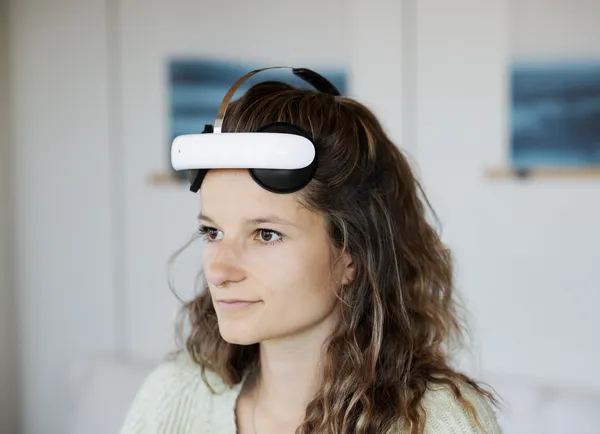
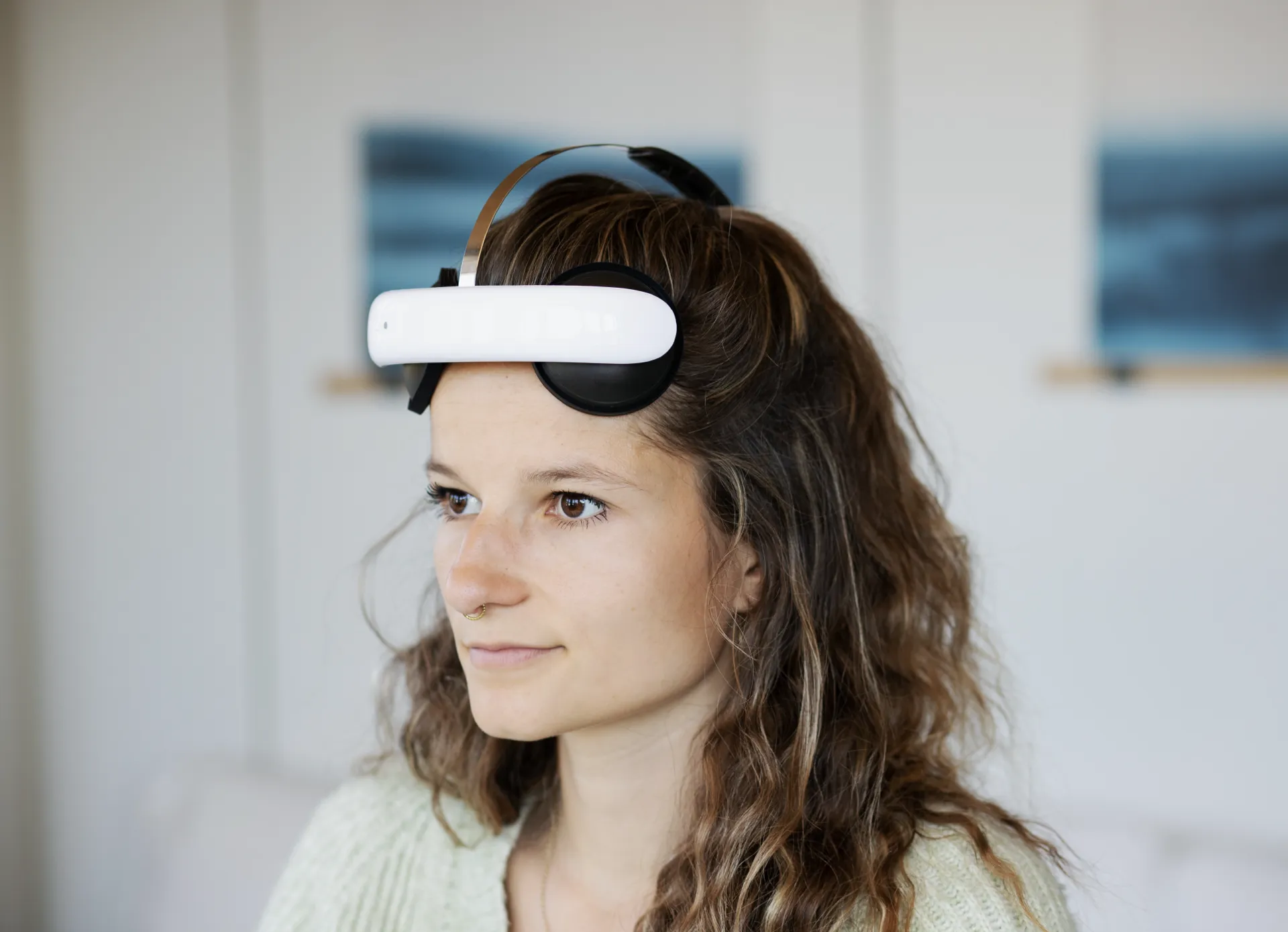
除了抗抑鬱藥和心理治療,經顱直流微電刺激是近年漸趨成熟的一個選項。經顱直流微電刺激英文全稱 transcranial direct current stimulation,簡稱 tDCS。
Flow tDCS微電流頭箍把 2 毫安的直流電送入左側背外側前額葉(left dorsolateral prefrontal cortex),令這一帶的腦細胞比平時容易被啟動,提升腦細胞之間連結的可塑性 [1]。
為什麼這樣可以緩解抑鬱?大腦左前額是情緒的控制台,負責兩大情緒相關功能:(1)保持正面和動力,推動你以行動感受生活 [2];(2)調控負面情緒 [3],確保大腦不過分關注負面資訊 [4]。受抑鬱影響的人的左前額活躍程度偏弱 [5],令他們有如在情緒低谷受困。Flow tDCS 針對的正是左前額皮層,透過微電流提升生活動能,令走出抑鬱低谷變得更有可能 [6]。
成效報告
一項在《自然醫學》發表的研究指出,經過十星期的在家Flow tDCS 治療後,高達 58% 的抑鬱症病人症狀減半,45% 的人不再符合抑鬱症診斷標準 [1][註1]。
2020 至 2024 年間,超過 14,000 名Flow 用家的抑鬱症狀在十星期內減至輕度[7]。
tDCS 正在英國國民保健署(NHS)試行。最新報告指出,58% 抑鬱症患者在六星期內有明顯改善 [8]。
認可
- 歐盟(荷蘭適用):CE 2797,2019 年 5 月 6 日起 [9]
- 英國:BSI(英國標準協會)認證 UKCA 776047,2019 年 5 月 6 日起 [9]
- 美國:FDA(PMA)P230024/JXK/21 CFR 882.5800,2025 年 12 月 8 日 [10]
在家治療
我們建議跟從臨牀研究療程以達致治療效果:頭三星期是啟動期,每週 5 次;之後七星期是維持期,每週 3 次,全程 36 次。治療每次 30 分鐘,期間坐着、躺着、或做些令你放鬆的事都可以 [1]。
我們提供 Flow 官方電極棉墊,確保安全和成效,以及減少不適。
Bon Accord Psychology 同步治療
在Bon Accord Psychology的首次面談,如果你的狀況經評估後訂爲合適,你可免費試用Flow tDCS[註2]。首次面談後,你可以(1)即時購買私人tDCS頭箍,及/或(2)同意開展心理治療,期間借用Bon Accord Psychology的tDCS頭箍[註2],直至心理治療完結。接受服務期間,Bon Accord Psychology亦提供免費的數據跟進服務,記錄病徵變化。
| 時間 | 內容 | 面談費用 | 頭箍費用 |
|---|---|---|---|
| 首次面談 | 評估你的抑鬱症狀和病歷﹑核對安全事項﹑現場試用tDCS頭箍﹑設定追蹤問卷 | €100(40 分鐘) | 免費試用 |
| 第 0 星期 | 記錄病徵變化 購買或借用tDCS頭箍 | — | 購買私人頭箍:€329(原價 €399) 借用頭箍按金:€190(只限進行心理治療者;交還頭箍時全數退回) 電極棉墊每次約 €1 (€23購買一盒,可使用24次) |
| 第 1–3 星期 | tDCS啟動期:每週 5 次 | — | |
| 第 4 星期初的面談 | 一起回顧頭箍使用體驗及數據。如你借用了tDCS頭箍,你可決定交還或購買裝置 | €80–120(30–45 分鐘) | |
| 第 4–10 星期 | tDCS維持期:每週 3 次 | — |
註: tDCS頭箍須使用智能手機啓動。如有需要,你可以按金€90借用我們的智能手機。
安全
Flow tDCS 裝置電流約為 2 mA,微乎其微,只有手機充電千分之一的流量。
臨牀研究中,約一半參加者曾經有輕微﹑短暫的副作用,主要是電極位置皮膚發紅;另約 14% 參加者短暫感到集中力受影響。除此之外,Flow tDCS 沒有帶來額外的副作用[1][註3]。
2026 年更新的 tDCS 國際安全指引,跨研究統計了超過 30 萬次在健康和臨牀羣組的刺激紀錄,並沒有任何與微電流刺激相關的嚴重不良事件報告 [11]。
同步藥物或心理治療
上述臨牀研究中有七至八成參加者有同步接受藥物或心理治療 [1] [8],故此同步使用微電流和藥物或心理治療具有一定實證基礎。初步證據指出,tDCS與某些抗抑鬱藥(如Sertraline) [12] 和心理治療 [13] 有相輔相成的作用。然而,如你正在或打算服用精神科藥物或正進行心理治療,我們建議你先與你的醫生和治療師討論你現階段是否適合同步展開微電流刺激。
登記
我誠邀你或者你身邊有需要的人登記免費試用 Flow tDCS[註2]。頭5位登記者,更可在首10星期免面談費(電極棉墊費用除外)。
請填寫以下表格登記,我們會儘快聯絡你。
────────────────────────
羅德浚博士
Tak Tsun (Edmund) Lo, PhD
香港註冊臨牀心理學家(204344)
香港心理學會臨牀心理副院士 (DCP666)
荷蘭 NIP 註冊心理學家(247500)
附註
[註1] 該研究為雙盲假刺激對照試驗。主動刺激組 58.3% 症狀減半﹑44.9% 不再符合診斷標準;假刺激對照組分別為 37.8% 及 21.8%。以另一常用量表(MADRS)計算,主動刺激組緩解率為 57.5%,對照組 29.4% [1]。
[註2] 你借用的頭箍可能曾由其他客戶使用。每次借出前,頭箍均按製造商的指示清潔;電極棉墊為個人專用,不會共用。你將在我的指導下使用頭箍。只有因你不當使用、疏忽或未有按照指示使用而直接造成的損毀或遺失,方須由你負責。其他產品本身設計、製造及安全的相關責任由製造商按照適用法律承擔。詳細條款載於你領取頭箍時簽署的借用附表。如你選擇自行購買全新及未開封的頭箍,製造商提供的 24 個月保養將直接適用於閣下。
[註3] 分組數字:電極位置皮膚發紅,主動刺激組 63.5%、對照組 18.5%;集中力受影響,主動刺激組 14.1%、對照組 3.7%。頭痛﹑頸痛﹑頭皮痛﹑痕癢﹑灼熱感﹑睏倦及情緒波動,兩組沒有分別。全程沒有與裝置相關的嚴重不良事件 [1]。
資料來源
[1] Woodham, R. D., Selvaraj, S., Lajmi, N., Hobday, H., Sheehan, G., Ghazi-Noori, A.-R., Lagerberg, P. J., Rizvi, M., Kwon, S. S., Orhii, P., Maislin, D., Hernandez, L., Machado-Vieira, R., Soares, J. C., Young, A. H., & Fu, C. H. Y. (2025). Home-based transcranial direct current stimulation treatment for major depressive disorder: A fully remote phase 2 randomized sham-controlled trial. Nature Medicine, 31(1), 87–95. https://doi.org/10.1038/s41591-024-03305-y
[2] Davidson, R. J. (2004). What does the prefrontal cortex “do” in affect: Perspectives on frontal EEG asymmetry research. Biological Psychology, 67(1–2), 219–233. https://doi.org/10.1016/j.biopsycho.2004.03.008
[3] Buhle, J. T., Silvers, J. A., Wager, T. D., Lopez, R., Onyemekwu, C., Kober, H., Weber, J., & Ochsner, K. N. (2014). Cognitive reappraisal of emotion: A meta-analysis of human neuroimaging studies. Cerebral Cortex, 24(11), 2981–2990. https://doi.org/10.1093/cercor/bht154
[4] Kohn, N., Eickhoff, S. B., Scheller, M., Laird, A. R., Fox, P. T., & Habel, U. (2014). Neural network of cognitive emotion regulation — An ALE meta-analysis and MACM analysis. NeuroImage, 87, 345–355. https://doi.org/10.1016/j.neuroimage.2013.11.001
[5] Grimm, S., Beck, J., Schuepbach, D., Hell, D., Boesiger, P., Bermpohl, F., Niehaus, L., Boeker, H., & Northoff, G. (2008). Imbalance between left and right dorsolateral prefrontal cortex in major depression is linked to negative emotional judgment: An fMRI study in severe major depressive disorder. Biological Psychiatry, 63(4), 369–376. https://doi.org/10.1016/j.biopsych.2007.05.033
[6] Wolkenstein, L., & Plewnia, C. (2013). Amelioration of cognitive control in depression by transcranial direct current stimulation. Biological Psychiatry, 73(7), 646–651. https://doi.org/10.1016/j.biopsych.2012.10.010
[7] Mu, M., Banazadeh, A., Cauchi, M., & Griffiths, C. (2026). Real-world effectiveness of self-administered transcranial direct current stimulation (tDCS) for depression: A retrospective cohort study. Journal of Affective Disorders Reports, 24, 101044. https://doi.org/10.1016/j.jadr.2026.101044
[8] Griffiths, C., Maravic da Silva, K., Jiang, H., Smart, D., & Zafar, A. (2024). “Flow” transcranial direct current stimulation (tDCS) for depression treatment in a primary healthcare general practice—Depression, functioning, and health-related quality of life outcomes. Open Journal of Depression, 13, 25–39. https://doi.org/10.4236/ojd.2024.132003
[9] Borrione, L., Suen, P. J. C., Razza, L. B., Dos Santos, L. A., Sudbrack-Oliveira, P., & Brunoni, A. R. (2020). The Flow brain stimulation headset for the treatment of depression: Overview of its safety, efficacy and portable design. Expert Review of Medical Devices, 17(9), 867–878. https://doi.org/10.1080/17434440.2020.1813565
[10] Bikson, M., Brunoni, A. R., & George, M. S. (2026). US FDA approves home-delivered tDCS for treating depression. Brain Stimulation, 19, 103021. https://doi.org/10.1016/j.brs.2025.103021
[11] Antal, A., Bjekić, J., Ganho-Ávila, A., Alekseichuk, I., Assecondi, S., Bergmann, T. O., Bikson, M., Brunelin, J., Brunoni, A. R., Charvet, L., Chen, R., Cohen Kadosh, R., Diedrich, L., D’Urso, G., Ferrucci, R., Filipović, S. R., Fitzgerald, P. B., Flöel, A., Fröhlich, F., … Ziemann, U. (2026). Low intensity transcranial electric stimulation: Safety, ethical, legal regulatory and application guidelines (2017–2025: An update). Clinical Neurophysiology, 184, 2111436. https://doi.org/10.1016/j.clinph.2025.2111436
[12] Brunoni, A. R., Valiengo, L., Baccaro, A., Zanão, T. A., de Oliveira, J. F., Goulart, A., Boggio, P. S., Lotufo, P. A., Benseñor, I. M., & Fregni, F. (2013). The sertraline vs. electrical current therapy for treating depression clinical study: Results from a factorial, randomized, controlled trial. JAMA Psychiatry, 70(4), 383–391. https://doi.org/10.1001/2013.jamapsychiatry.32
[13] Khanna, A., Shergill, M., Soni, N., Blair, M., & Burhan, A. M. (2026). The potential for synergistic effect of non-invasive brain stimulation and cognitive behavioural therapy for depressive and cognitive outcomes in major depressive disorder: A scoping review. Psychiatry Research, 359, 117011. https://doi.org/10.1016/j.psychres.2026.117011